Seam failure found by probing
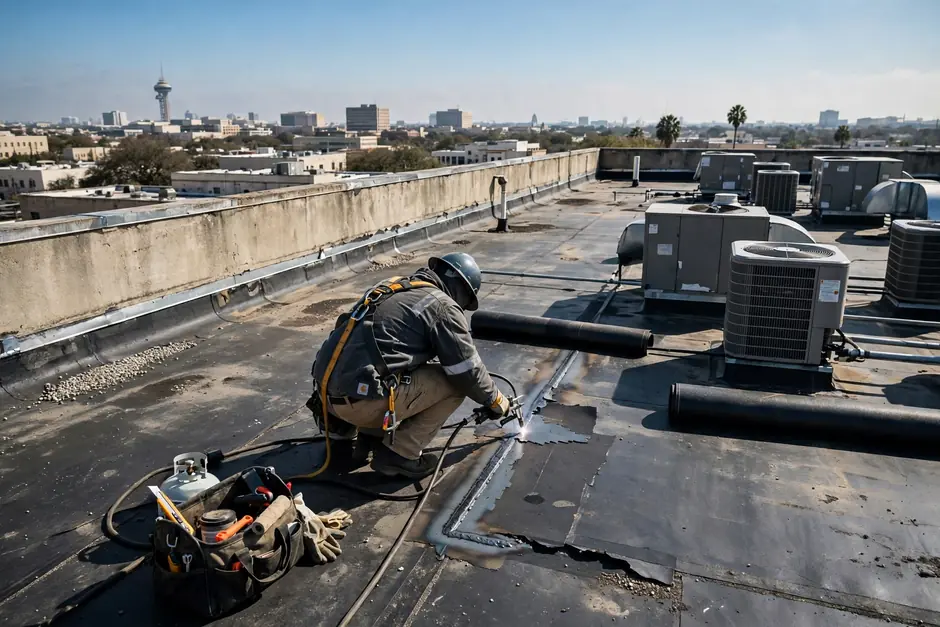
Failed seams are probed, not just looked at. A seam that looks closed can be open underneath, and probing finds it before the next rain does.
Low-slope roofs in San Antonio fail at their seams and their drains. Thermal movement opens seams as the roof expands and contracts in the heat. Ponding sits where drainage is too shallow, and the water works at the membrane until it finds a way in. A flat roof repair starts by finding the failed seam or the ponding, and by checking the deck underneath before it rots.
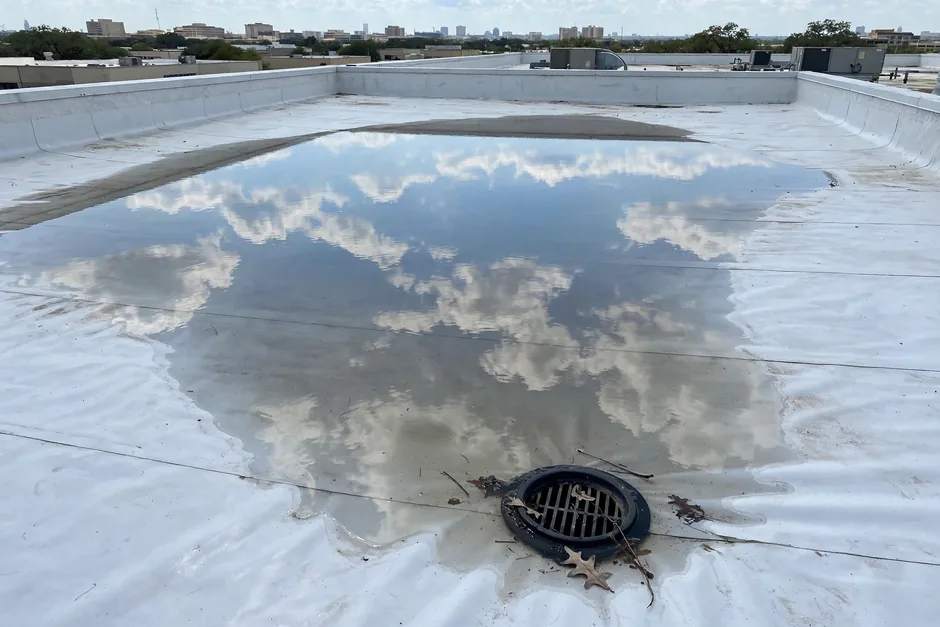
We start by mapping the water. Where does it pond, how long does it sit, and where does it enter? Then we check the seams: heat-welded TPO seams and sealed modified bitumen seams both fail from thermal movement, and a failed seam is found by probing, not by looking. The deck underneath is checked with a moisture meter, because a membrane that has been leaking hides a rotten deck.
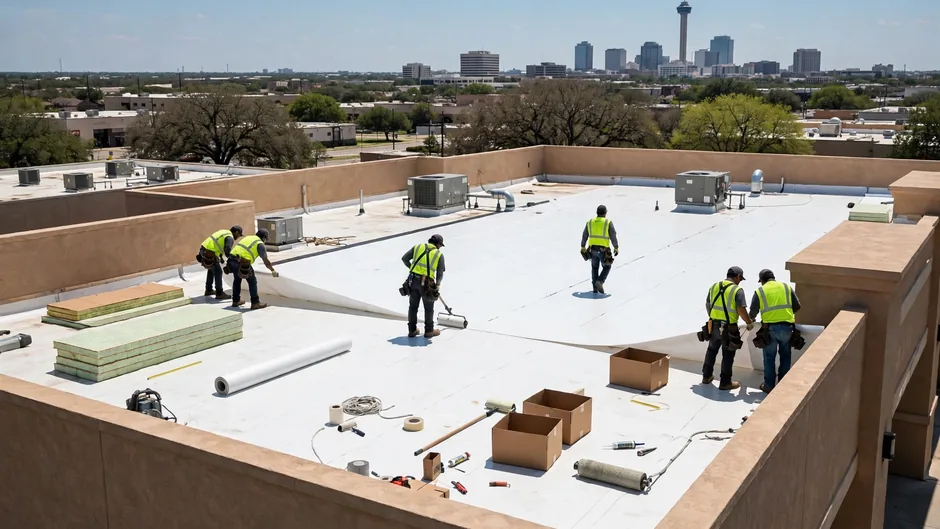
The repair depends on what we find. A single failed seam gets cut back, re-welded or re-sealed and probed. Ponding gets a drainage fix: a drain re-set, a scupper added, or a slope corrected. A membrane that has failed across the field, or a deck that is soft across a wide area, is not a repair candidate, and we say so. Flat and low-slope membranes realistically last 15 to 25 years here, and a repair on a membrane past that life is money spent twice.
A low-slope repair is small work, but it still has to be done to the same standard as an install. On every call we run the checks listed below.
Failed seams are probed, not just looked at. A seam that looks closed can be open underneath, and probing finds it before the next rain does.
We map where water sits and how long it stays, then fix the drainage: a drain re-set, a scupper added or a slope corrected.
A moisture meter reading under the membrane finds wet or rotted decking, so the repair covers the real damage, not just the visible seam.
Most low-slope leaks start at an edge or a penetration. We check and re-seal edge metal and flashing on the same visit.
The repair uses the same membrane type and seam method as the existing roof, so the patch becomes part of the roof instead of a weak spot.
You get a written description of what failed, what we fixed and what to watch. If the membrane is past its life, we say so.
Call (254) 329-0299 during business hours and tell us where the water shows, when it appears and how long it ponds after rain.
We walk the roof after rain if possible, mapping ponding and tracing the water path to its entry point.
Seams are probed, the deck is checked with a moisture meter, and edge metal and flashing are inspected.
The failed seam is cut back and re-welded or re-sealed, the drainage is fixed, and the repair is probed and checked.
We tell you what to watch after the next heavy rain, so a repair that did not hold is caught early.
Call (254) 329-0299 during business hours and tell us where the water shows, when it appears and how long it ponds after rain.
Probes each seam to find where it has opened underneath, so a failed seam is found by testing, not by guessing.
Re-welds TPO seams into a single sheet. A re-welded seam is the strongest repair on a low-slope roof when it is done right.
Reads wet decking under the membrane, so the repair covers the real damage instead of the visible seam.
Cuts membrane cleanly for a patch, so the repair bonds properly instead of lifting at the edge.
Tie-offs on every roof, low-slope included. A low pitch is still high enough to fall from, so the harness goes on before anyone steps onto the membrane.
The failed seam, the ponding and the deck condition are photographed, so you can see what failed and what we fixed.
A low-slope section can leak at a seam after every heavy rain even when the seam looks closed from above.
What we do: probe the seam, find the opening underneath, cut it back and re-weld it, and check the deck below with a moisture meter before we close up.
Book this service →A garage roof that ponds at the drain after every rain, with the membrane blistering around the pond, needs the drain re-set and the slope corrected.
What we do: re-set the drain, correct the slope to it, and repair the membrane where the ponding had worked it loose.
Book this service →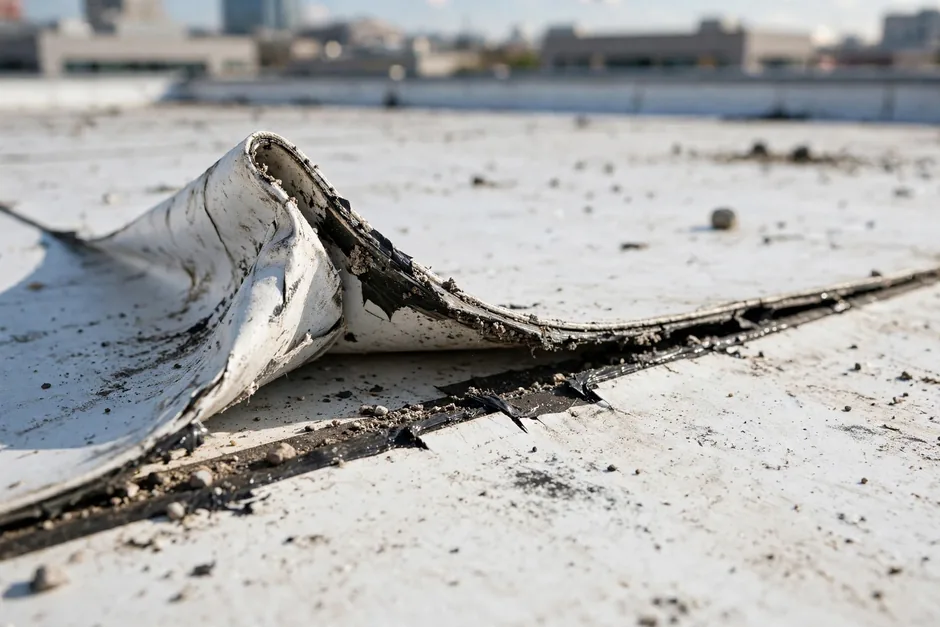
Where a flat addition ties into a pitched roof, wind-driven rain can find the joint and leak there.
What we do: re-flash the tie-in, re-seal the membrane at the joint, and check the drainage on the flat section so water sheds instead of sitting at the seam.
Book this service →A flat-roof leak is usually a small failure with a long fuse: a seam that looks closed and is not, water that never drains, a deck rotting under a sound-looking membrane, or a leak at the edge rather than the field. Below are the four we are called out for most, and what happens when each one is ignored.
Ask a pro →We probe seams, not just look at them. A seam open underneath leaks in the next heavy rain while looking fine from above.
Water that sits works at the seams until they fail. We map the ponding and fix the drainage, not just the membrane.
We check the deck with a moisture meter before we repair. A patch over a rotten deck hides the problem until the deck fails.
Most low-slope leaks start at an edge or a penetration. We check edge metal and flashing on the same visit.
“Found their ad on marketplace, super quick feed back. Gentlemen stopped by same day to inspect roof. This company is extremely professional and quick. They had our roof done in 2 days. Great price point and easy to work with. Thank you Juarez Contracting.”
Alethia VelazquezGoogle review
“Chris was professional, on time for the estimate, very informative about what needed to be done,and willing to work with me. Thank you for a job well done.”
Belinda SalinasGoogle review
“Very fast estimate and fixed within 24 hours of asking them for help. Very fast and very reliable. My roof looks great!”
Jamie KGoogle review
Flat and low-slope membranes realistically last 15 to 25 years here. The failure mode is usually seam failure from thermal movement or ponding, not the membrane wearing through.
Often, yes, if the membrane is not past its life and the deck underneath is sound. A single failed seam can be cut back and re-welded or re-sealed. A membrane that has failed across the field, or a soft deck, is a replacement, and we say so.
Because the drainage is not keeping up with the roof area or the slope to drain is too shallow. We map the water path and fix the drainage as part of the repair, not just the membrane.
Thermal movement. The roof expands and contracts in the heat, and seams that were not detailed for that movement open up. We probe seams to find the failure and re-weld or re-seal them properly.
Call (254) 329-0299 during business hours and we will map the water, probe the seams and fix the real cause.
Call (254) 329-0299 →Call us at (254) 329-0299 or send an email. We answer the phone during business hours and return after-hours messages first thing the next business morning. Low-slope repair visits are by appointment.