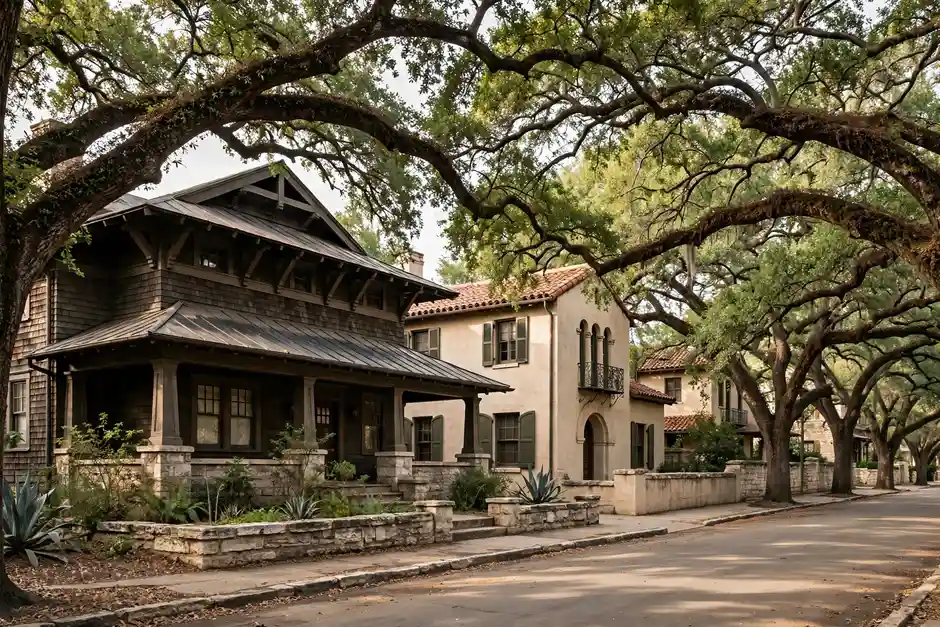
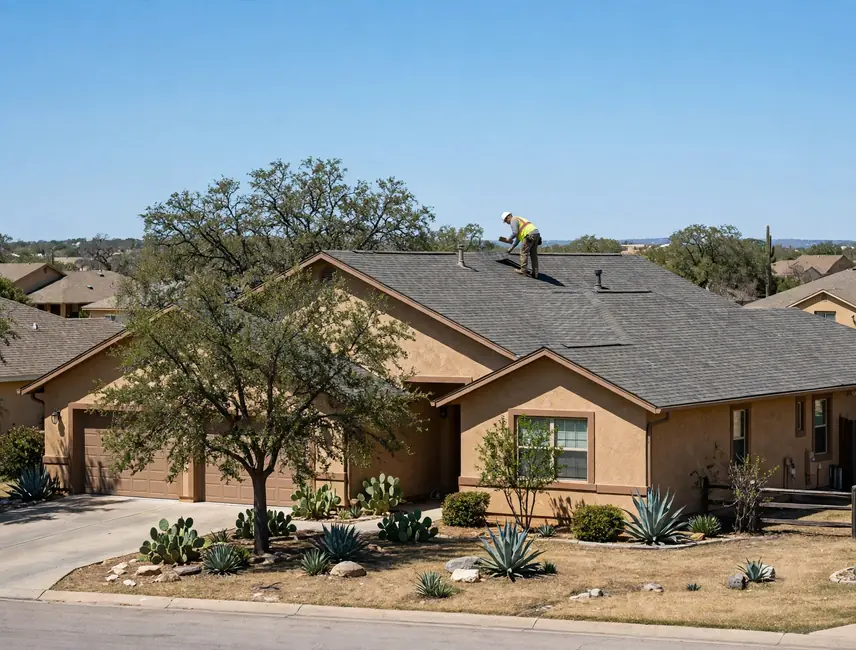
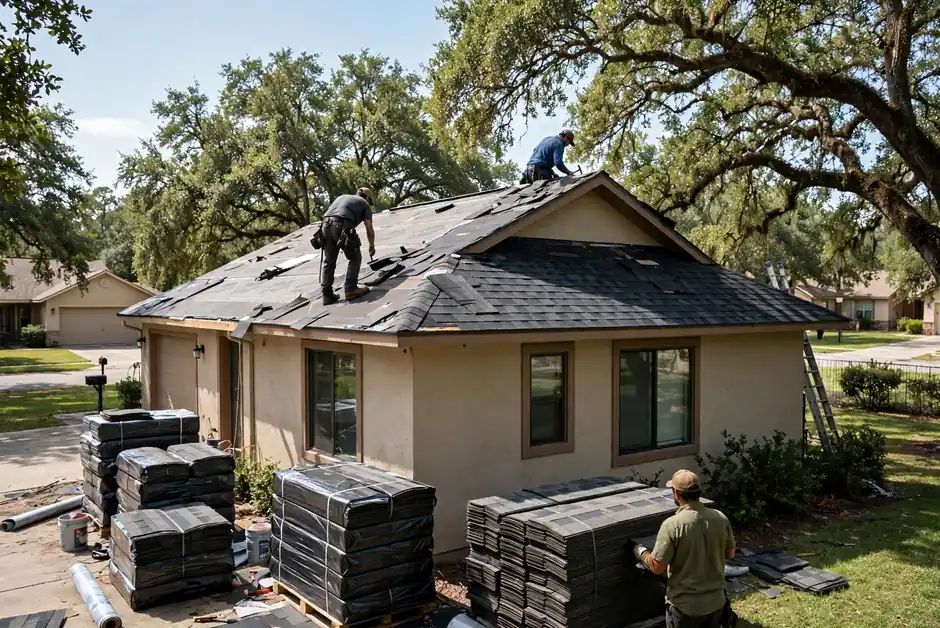
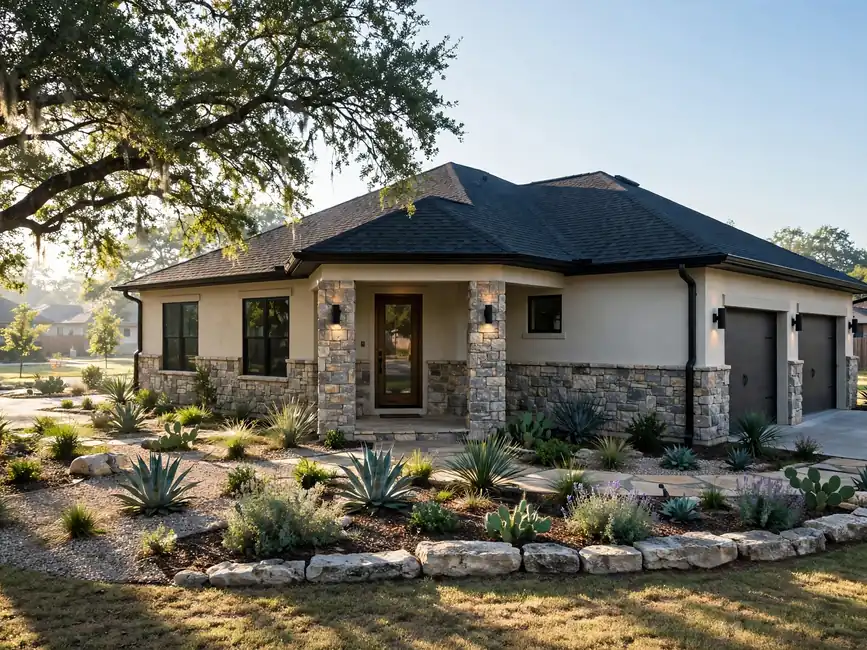
Mahncke Park sits in central San Antonio, beside Fort Sam Houston and Brackenridge Park, in the 78209 area — the San Antonio portion of a postal area that also covers the separate cities of Alamo Heights and Terrell Hills. Its houses are early-20th-century, in the same generation as Monte Vista’s, with the large houses and mature live-oak canopy that the whole 78209 area is known for, and the same pre-1960 pier-and-beam construction that most central San Antonio houses share. The roofing work here is the central-city pattern: steep shingle and tile on older houses, flashing details at dormers and chimneys, valleys that have collected decades of debris, and roofs that are often on their second or third covering. The Brackenridge Park and Garden District area sits beside it — park, zoo, Japanese Tea Garden, Witte Museum, DoSeum, and Botanical Garden along Broadway — a park and museum district, not a residential neighbourhood, and not a roofing market. The houses are Mahncke Park; the park is the landmark.
Explore Mahncke Park services →
The live oaks are the defining maintenance fact here, as they are across central San Antonio. Live oak is the default shade tree of Central Texas, and the canopy over Mahncke Park is mature and heavy. That means shade that keeps shingle temperatures down, and leaf and limb debris that fills valleys and gutters — live oaks shed in a rush in late February and March — plus the limb-fall risk when ice or wind loads a tree that holds its leaves through winter. Oak wilt makes the tree work a roofing decision: Texas A&M Forest Service guidance says not to wound oaks from 1 February to 30 June, and to paint every oak wound immediately, in any month. Hail is the other shared risk: Bexar County logged 363 reports of hail one inch or larger between 1996 and mid-2026, about 85 percent of them in March through May, and the 12 April 2016 storm put two-to-three-inch hail just north of downtown.
Juarez contracting & innovation LLC