Hail bruise mapping
Hail bruising, granule loss and cracked tile are checked on every slope, marked and photographed, so the damage map is complete rather than a guess.
San Antonio's storm story is written in dates. 12 April 2016 brought 4.5-inch hail and about $1.36 billion in damage, the costliest hailstorm in the city's history. 3 May 2021 brought a 5.5-inch stone near Sayers, the largest Bexar County report in the modern record. Storm damage repair here starts by measuring what the storm actually did to your roof, slope by slope, against that record.
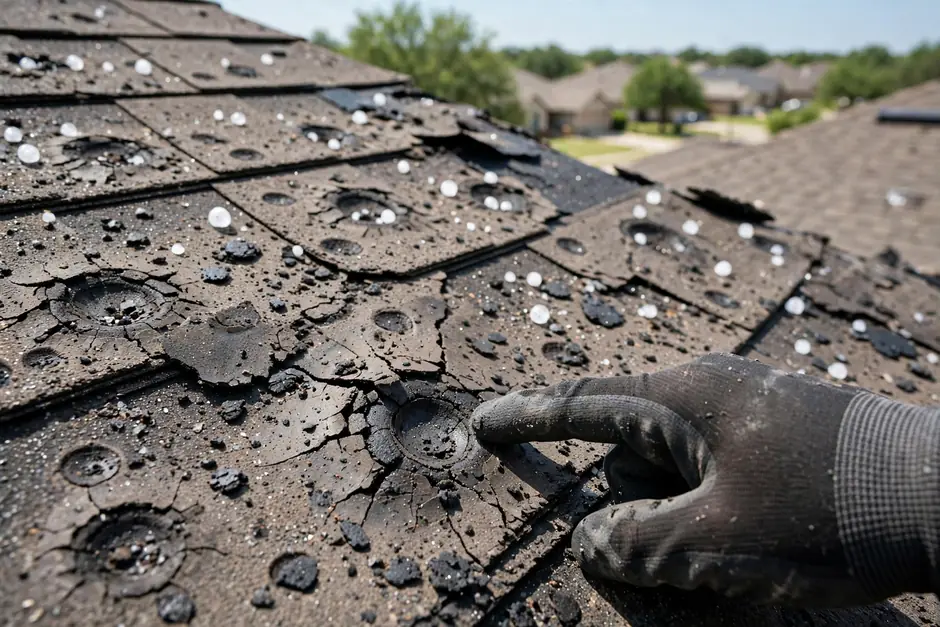
Storms hit San Antonio roofs three ways. Hail bruises shingles, cracks tile and strips granules. Wind lifts shingles, tears ridge caps and drives rain under the edge. Heavy rain overwhelms valleys and gutters and backs water under the eaves. A storm repair starts with a slope-by-slope inspection that separates storm damage from age and wear, because your insurer will ask exactly that question and the answer has to be documented.
The season matters. About 85 percent of Bexar County hail reports of one inch or more fall in March, April and May, and April alone accounts for 158 of the 363 reports in the 1996 to mid-2026 record. Wind comes from thunderstorms, not hurricanes: the strongest measured thunderstorm gust in the modern record is 77 mph, and the City's design wind speed for a house is 108 mph. We document what the storm did, give you the photos and the written scope, and leave the claim itself to you.
A storm repair is only as good as its documentation. On every storm call we check and record the items below.
Hail bruising, granule loss and cracked tile are checked on every slope, marked and photographed, so the damage map is complete rather than a guess.
Lifted shingles, failed seal strips, torn ridge caps and loose flashing are found on the same visit, because wind rarely damages only one spot.
Valleys, gutters and eaves are checked for where wind-driven rain got under the edge, so the repair covers the entry point, not just the stain.
We record what is storm damage and what is age and wear. An insurer will ask, and a straight answer protects your claim.
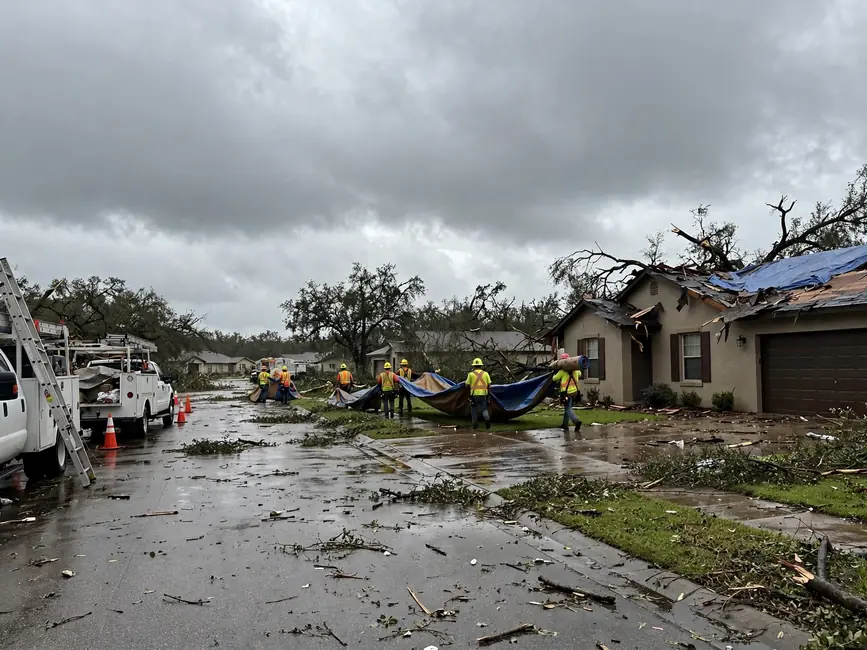
If the roof is open, we tarp and stabilise it during business hours before the permanent repair is scoped, so the next rain does not make it worse.
Call (254) 329-0299 during business hours and tell us the storm date, what you saw and where the water is coming in.
Every slope is walked and photographed — hail bruising, wind lift and rain entry — and the attic side is checked with a moisture meter.
You get a written scope that separates storm damage from age and wear, with photos located by slope, ready for your records.
If the roof is open we tarp and stabilise it, so the next rain does not widen the damage while the permanent work is planned.
The storm repair or replacement is scheduled once the weather clears, with permit paperwork prepared where a re-roof is needed.
Call (254) 329-0299 during business hours and tell us the storm date, what you saw and where the water is coming in.
Damage is photographed and located by slope before anything is moved, so the record shows what the storm left, not what we found later.
How far the water travelled through the deck and attic is traced with the meter, so the written scope covers all of the damage — not only the hole you can see.
Hail bruises and soft spots are marked on the roof as we find them, so the damage map is complete.
Damaged shingles come off without tearing the sound ones around them, so the repair stays a repair.
A storm-damaged roof is often wet and loose underfoot, and more dangerous than a sound one — so fall protection goes on every pitch.
We sweep the lawn and driveway after the visit — storm debris and nails are a hazard on their own.
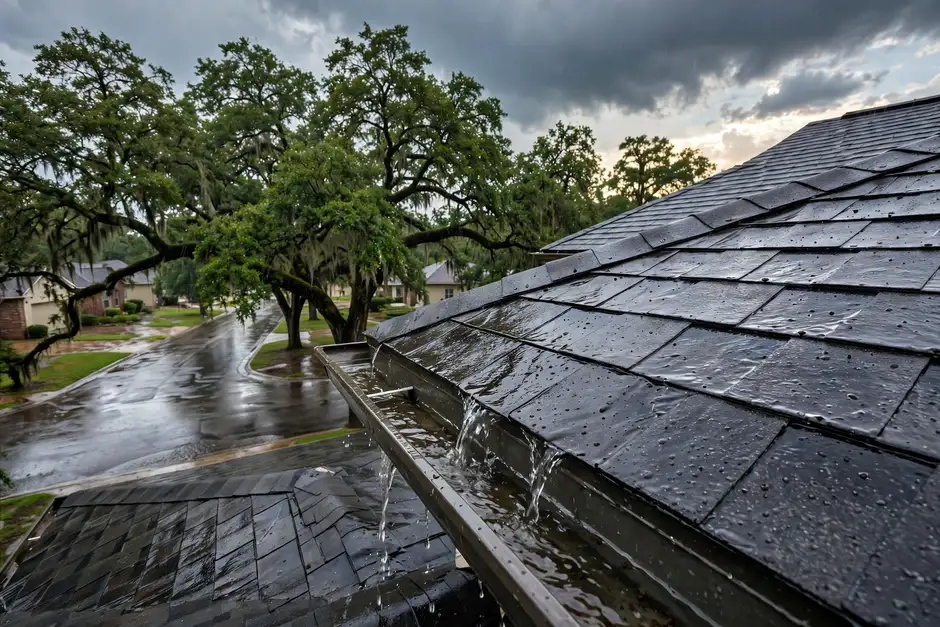
After a severe hailstorm, bruising can cover the north and west slopes, and the granule loss that comes with it is easy to miss from the ground.
What we do: a slope-by-slope hail map with photos, granule loss recorded, and a written scope that separates storm damage from age for the homeowner's insurer.
Book this service →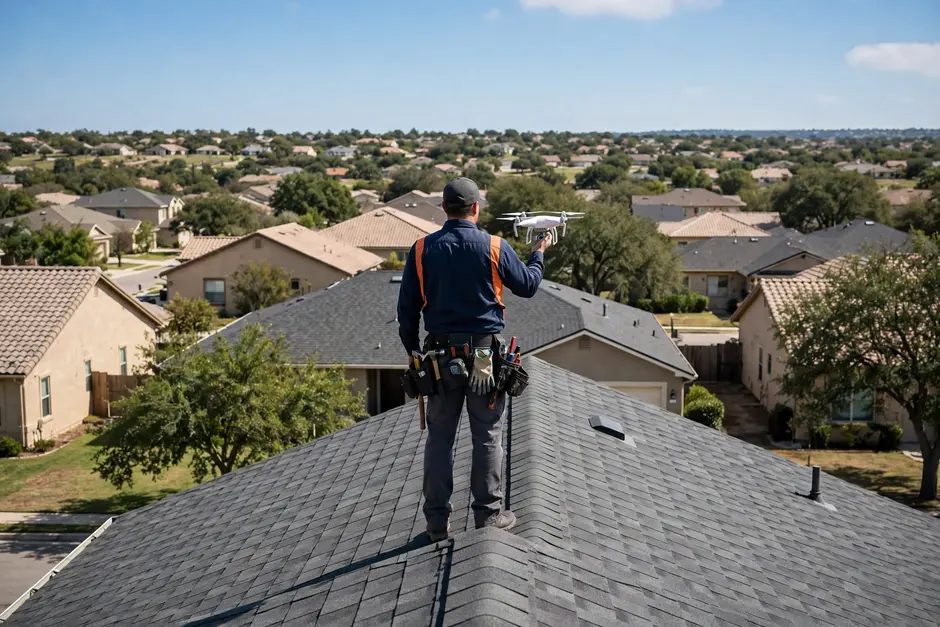
A wind event can lift courses on a slope and tear the ridge cap, with rain driven under the edge.
What we do: wind lift documented, ridge cap replaced, courses re-sealed, and the valley and eaves checked for rain entry, so the repair covers the whole wind path.
Book this service →
A storm dropping very large hail can bruise a roof without always leaking on day one — the kind of damage that needs mapping slope by slope.
What we do after a storm: hail mapping across every slope, cracked tile and bruised shingles photographed, and a scope separating the storm’s damage from the roof’s age.
Book this service →Most storm failures in San Antonio announce themselves long before the ceiling stains: a lifted shingle here, a bruised mat there, flashing worked loose by a gust. Below are the storm problems that come up most on our calls, and what follows when they are ignored.
Ask a pro →We map storm bruising slope by slope while it is fresh. Undocumented hail becomes a denied claim and a leak two years later.
Wind rarely damages one spot. We check the ridge, the flashing and the courses above and below, so the repair covers the whole wind path.
Wind-driven rain can enter at a valley or eave that is sound in dry weather. We trace the entry point instead of replacing shingles that are fine.
What the storm did and what is wear are both recorded. A straight answer protects your claim and keeps the repair honest.
“Found their ad on marketplace, super quick feed back. Gentlemen stopped by same day to inspect roof. This company is extremely professional and quick. They had our roof done in 2 days. Great price point and easy to work with. Thank you Juarez Contracting.”
Alethia VelazquezGoogle review
“Chris was professional, on time for the estimate, very informative about what needed to be done,and willing to work with me. Thank you for a job well done.”
Belinda SalinasGoogle review
“Very fast estimate and fixed within 24 hours of asking them for help. Very fast and very reliable. My roof looks great!”
Jamie KGoogle review
12 April 2016. Stones up to 4.5 inches fell across the city, damaging about 136,000 vehicles and 125,000 homes, with about $1.36 billion in damage. The National Weather Service calls it the costliest hailstorm in San Antonio history.
March through May is when it happens: about 85 percent of Bexar County hail reports of one inch or more in the 1996 to mid-2026 record fall in those three months, and April alone accounts for 158 of 363 reports. That is why spring is storm season for San Antonio roofs.
That depends on your policy, not on us. We document the damage with photos and a written scope for your insurer. We do not file the claim or negotiate it — Texas law bars a contractor from acting as your adjuster — and your deductible is yours to pay.
By the pattern. Hail bruising is localised by slope and stone size, wind lift follows the wind path, and age shows as even granule loss and curling across the whole roof. We record both and show you the photos.
Call (254) 329-0299 during business hours for a slope-by-slope storm inspection with photos and a written scope.
Call (254) 329-0299 →Call us at (254) 329-0299 or send an email. We answer the phone during business hours and return after-hours messages first thing the next business morning. Storm inspections are by appointment.