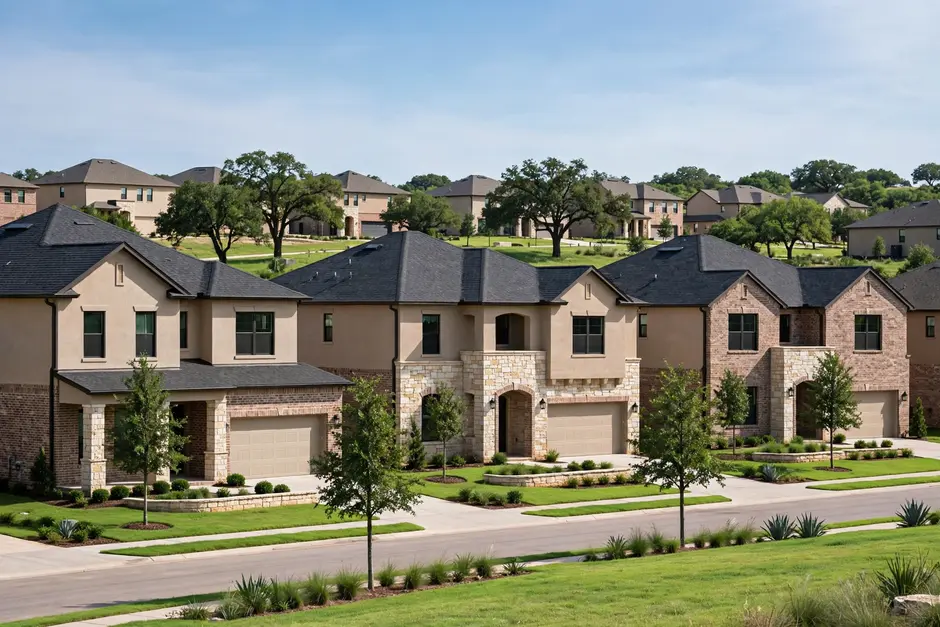
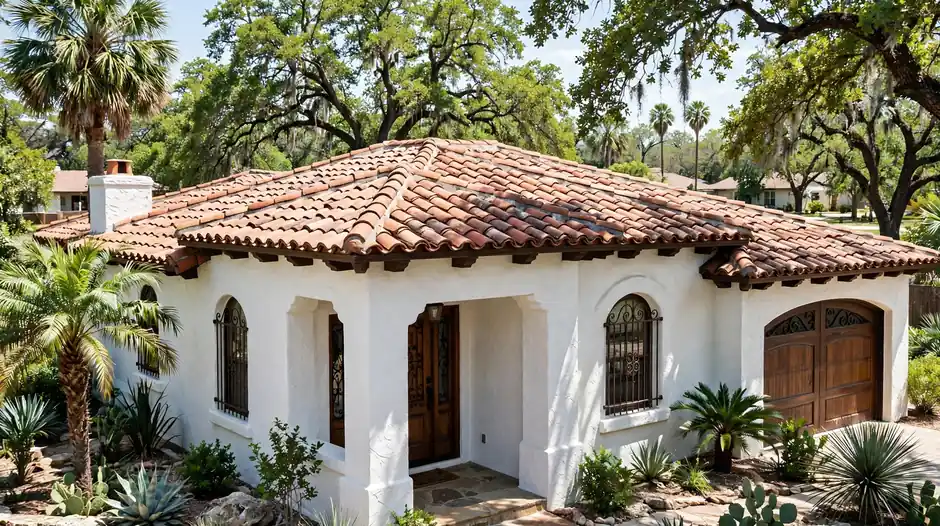
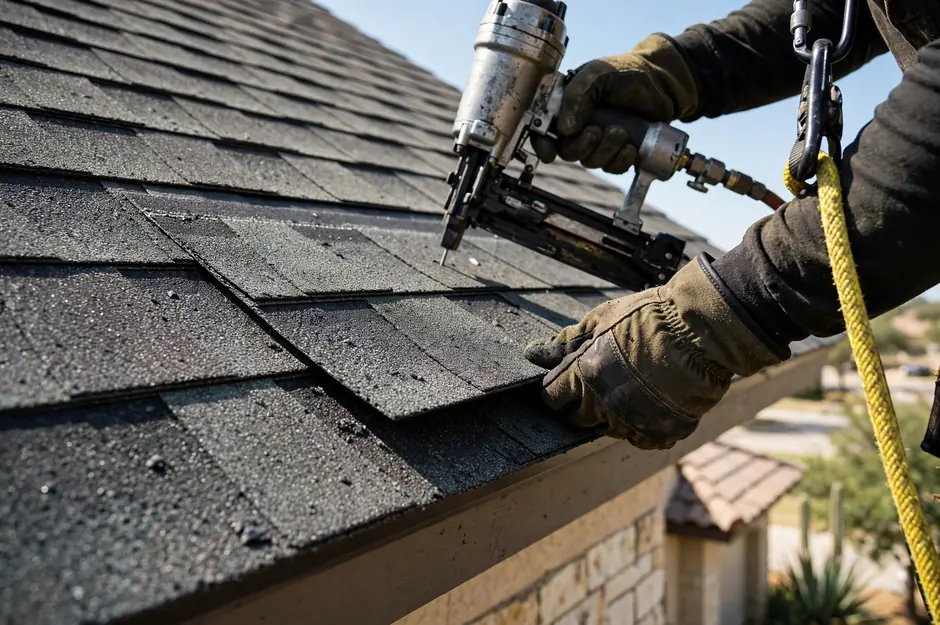
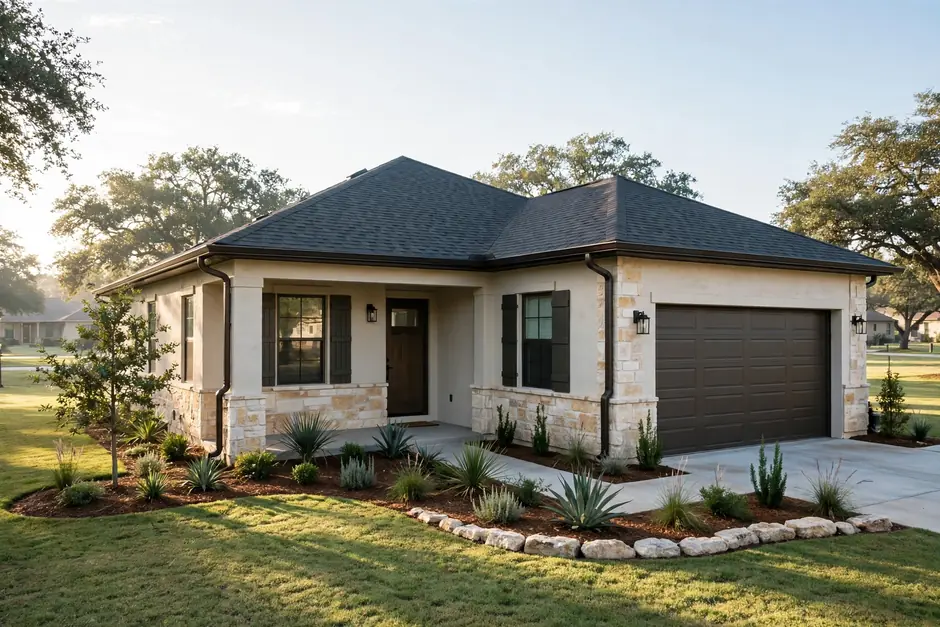
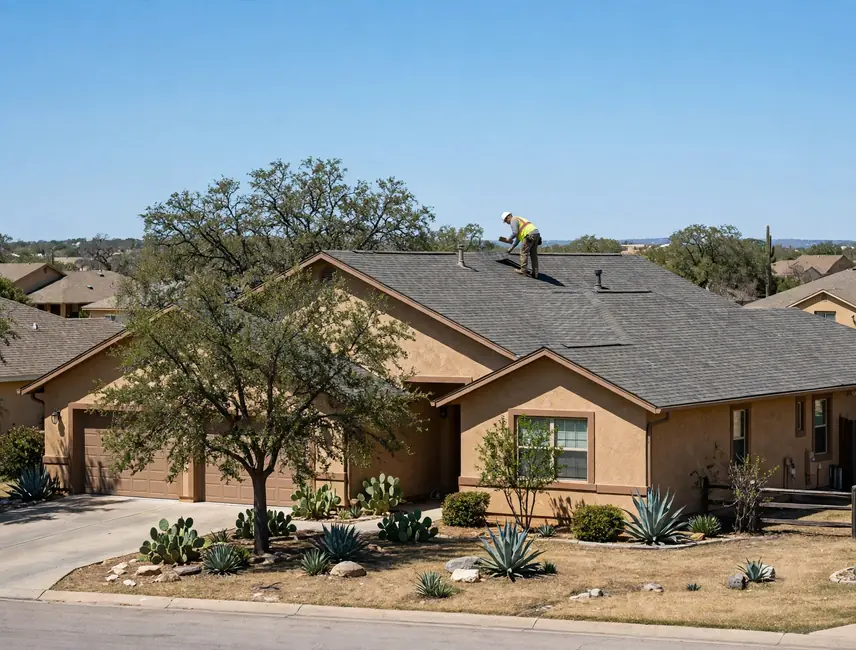
Encino Park grew as a far-north master-planned community along Bulverde Road and US-281, north of Stone Oak, in the 78259 area. Like Stone Oak, it is a product of the 1990s-onward wave: gated enclaves, two-story plans, stone and stucco elevations, golf courses nearby, and HOAs that run an architectural review committee. The dominant materials are the same too — tile-heavy on the Mediterranean and Spanish-style homes, architectural asphalt shingle everywhere else — and the same trade rules apply: tile lasts 50 years or more while its underlayment is a 20 to 30 year component, and architectural shingles in San Antonio realistically last 15 to 20 years, with the south and west slopes ageing first. Because whole subdivisions here were built in waves, whole streets reach replacement age together, and the first question on any Encino Park roof is the same as in Stone Oak: which year was it built, and what has the sun and the spring storms done to it since?
Explore Encino Park services →
Hail is the shared far-north fact. Bexar County logged 363 reports of hail one inch or larger between 1996 and mid-2026, about 85 percent of them in March through May, and the 12 April 2016 storm — 4.5-inch stones, around $1.36 billion in damage, the costliest hailstorm in San Antonio history — hit the north side hardest. On a roof already close to the end of its shingle life, hail shows up sooner and the roof comes back worse — bruised mats, missing granules, and ridge caps that lift and fail months later. One caution on geography: the 78260 area just north of here is Timberwood Park, an unincorporated community that looks like an extension of Stone Oak on a map but is not in the City of San Antonio. Encino Park is inside the city, in 78259; the boundary matters for permits, and we check it rather than assume it.
Juarez contracting & innovation LLC