Standing-seam panels
Panels joined by raised seams with concealed fasteners. No exposed nail heads to work loose in the heat and wind.
Standing-seam metal is growing across San Antonio, especially on the Hill Country fringe and on modern, ranch and farmhouse builds out toward Boerne and Bulverde. It earns that growth honestly: 24-gauge steel stands up to hail better than any shingle, light colours and cool coatings reflect the heat, and the material lasts 40 to 70 years because heat and UV do not degrade it the way they degrade asphalt. It is also lighter than asphalt, at roughly 100 to 150 pounds per square.
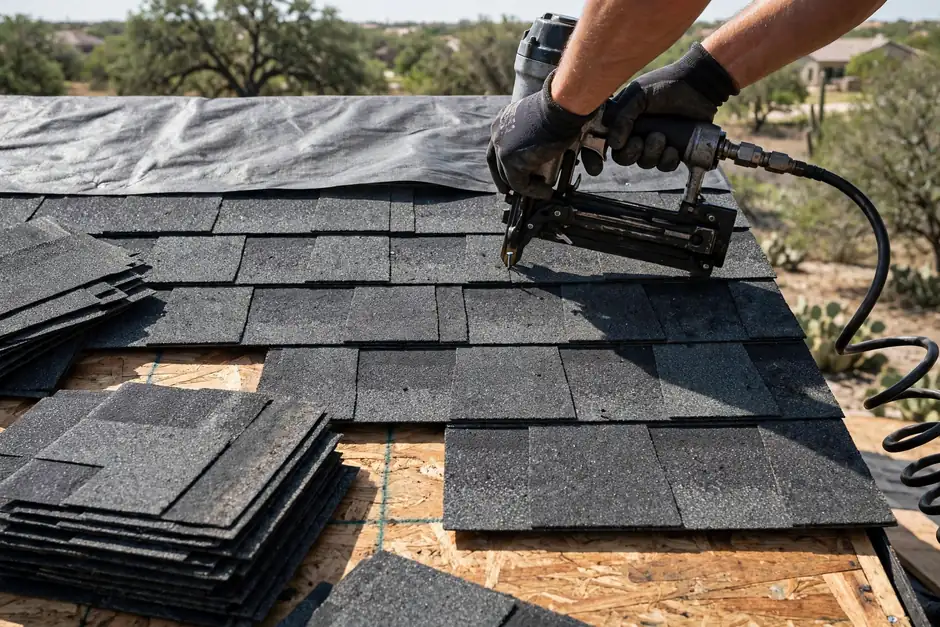
A standing-seam roof is panels joined by raised seams, with concealed fasteners and no exposed nail heads to work loose. The seams shed water, the panels expand and contract on clips, and the whole system is lighter than the asphalt it replaces. That matters on a re-roof, because the structure does not need the engineering a tile change would. But a metal roof is not a shingle roof with different material: the detailing at valleys, walls and penetrations is its own craft, and a bad detail leaks just as surely as a bad shingle detail.
Two decisions need care. First, a change from shingles to metal at the same pitch is a material change, and the City's re-roof application asks about it; a pitch change needs an engineer's report and full plan review. Second, in one of San Antonio's 32 historic districts, a shingle-to-metal change is a discretionary decision by the Historic and Design Review Commission, not a like-for-like swap. We walk through both before you decide, and we prepare the permit paperwork where it is needed.
A metal roof is a system, not a surface. The items below are standard on our written scope, so you can see what is included before you decide.
Panels joined by raised seams with concealed fasteners. No exposed nail heads to work loose in the heat and wind.
Heavier-gauge steel stands up to hail better than any shingle. Metal usually dents instead of breaking through, and we tell you when that is what we are seeing.
Light colours and cool coatings reflect the sun instead of absorbing it, cutting the heat load on the attic and the cooling bill with it.
Panels expand and contract on clips as the roof heats and cools. The detailing is built for that movement, so seams do not open up.
Step flashing at walls, pipe boots at penetrations and new drip edge around the perimeter, detailed for metal, not borrowed from a shingle job.
We prepare the City re-roof paperwork where a permit is needed and the job ends with the City's final building inspection.
We walk the roof, check the deck and structure, measure every slope and talk through the material change: what it means for the permit and for the look of the house.
Panel layout, seam placement, colour and coating are set out on the written scope, so you can see the finished roof before it is ordered.
The deck is inspected and repaired, underlayment and valley membrane go down, and the roof is watertight before the first panel arrives.
Panels are laid to the layout, seams are closed, clips are set for thermal movement, and flashing is fitted at every wall and penetration.
We walk the finished roof with you, showing the seam and flashing details, and confirm the final inspection is scheduled.
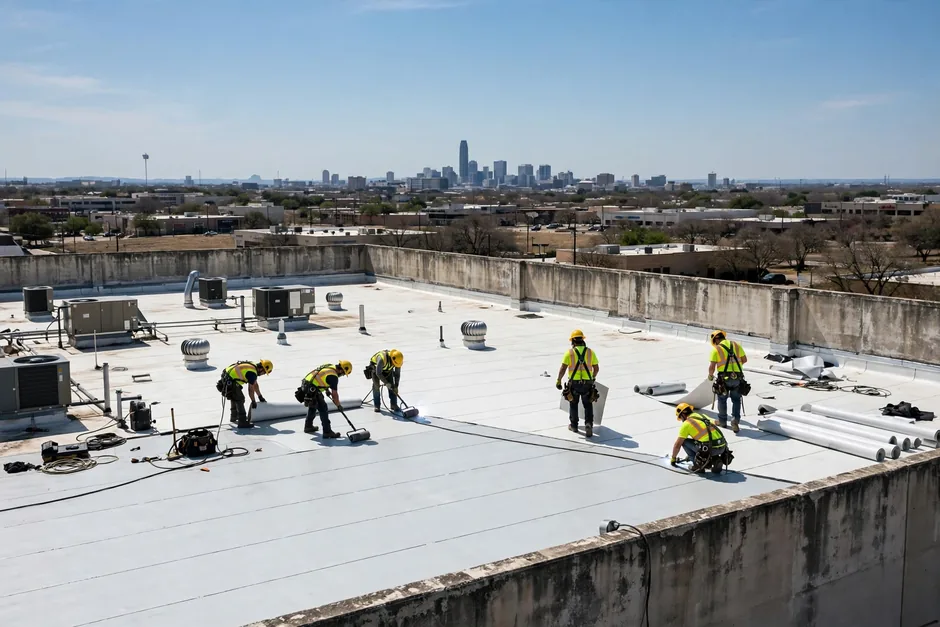
We walk the roof, check the deck and structure, measure every slope and talk through the material change: what it means for the permit and for the look of the house.
Closes standing seams to the manufacturer's profile. A properly closed seam is the weather seal on a metal roof.
Cuts and folds panels and flashing cleanly at valleys, hips and penetrations, where a ragged edge becomes a leak.
Finds wet decking before the metal covers it, so soft sheets are replaced instead of roofed over.
Snaps straight reference lines for panel courses. Straight panels are not cosmetic; they are how you know the roof is laid to spec.
Fall protection on every pitch. Metal panels are slick underfoot, and a metal roof is more dangerous than a shingle roof to walk.
A sweep of the lawn and driveway after the job, because metal offcuts and fasteners from a metal install are a hazard on their own.
A home on a 15 to 20 year shingle cycle may want a roof that outlasts the mortgage.
What we do: a structural check first, then a standing-seam install with 24-gauge panels, concealed fasteners and new flashing throughout, with the permit paperwork prepared for the material change.
Book this service →A modern two-story home may want a clean standing-seam look with heat reflectivity for the summer cooling load.
What we do: panel layout set out on the written scope, light-coloured coating for reflectivity, and seams and flashing detailed for thermal movement.
Book this service →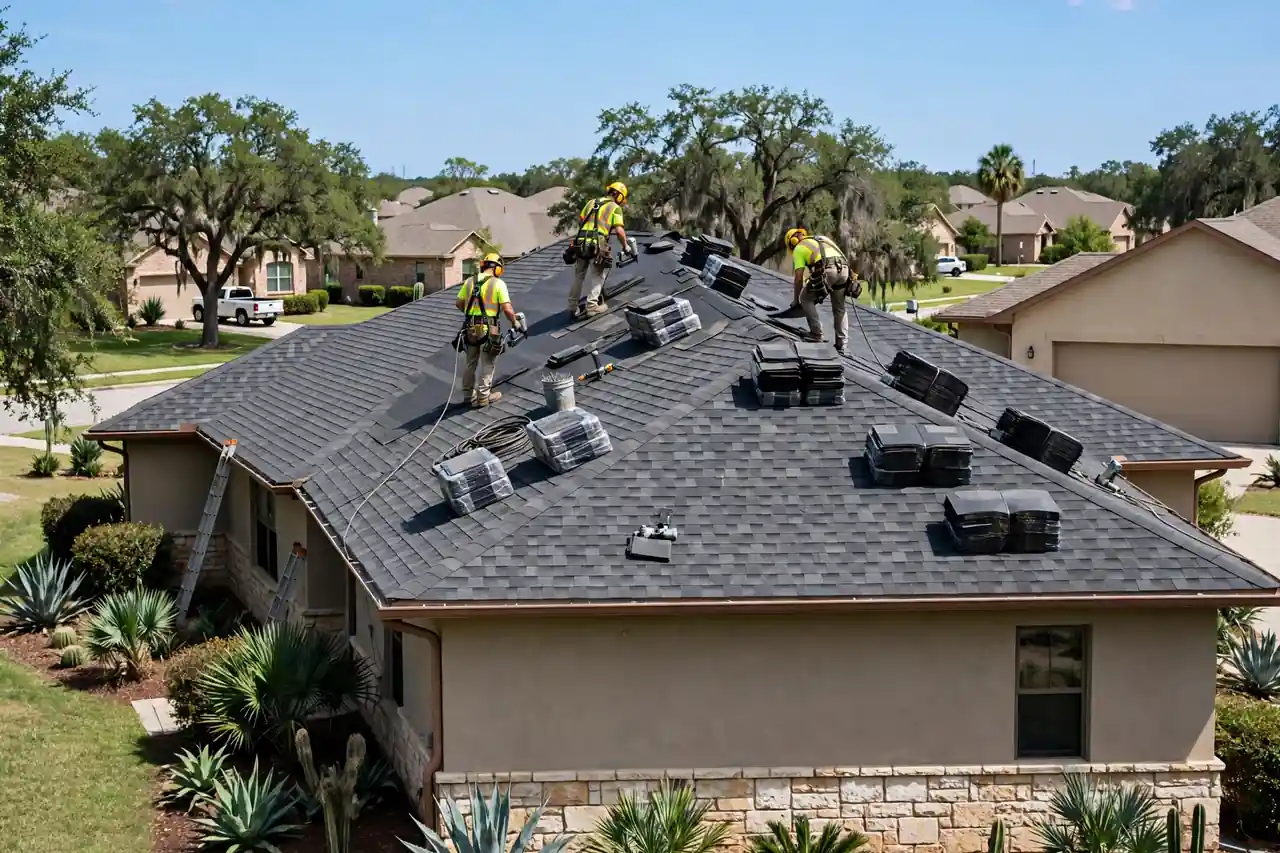
A ranch home that has replaced shingles twice after hail may want a roof that dents instead of breaking.
What we do: an honest read on what metal does and does not do in hail, then a 24-gauge standing-seam install with the deck checked first.
Book this service →The case for metal usually starts with shingles giving up: hail that keeps eating them, heat cooking them from above and below, or a metal roof detailed as if it were shingles. These are the metal-roofing problems we see most, and what happens when a material change goes in with no permit plan behind it.
Ask a pro →Metal dents rather than breaking through. We explain the hail trade-off honestly, including that denting is cosmetic and the roof still sheds water.
A reflective metal surface cuts the heat load on the attic. We pair it with balanced ventilation so the attic does not cook the roof from below.
Metal detailing is its own craft. We fit flashing and seams for metal, not borrowed from a shingle job, so the details hold.
A shingle-to-metal change is a material change on the City's re-roof application. We prepare the paperwork and talk through the permit before work starts.
“Found their ad on marketplace, super quick feed back. Gentlemen stopped by same day to inspect roof. This company is extremely professional and quick. They had our roof done in 2 days. Great price point and easy to work with. Thank you Juarez Contracting.”
Alethia VelazquezGoogle review
“Chris was professional, on time for the estimate, very informative about what needed to be done,and willing to work with me. Thank you for a job well done.”
Belinda SalinasGoogle review
“Very fast estimate and fixed within 24 hours of asking them for help. Very fast and very reliable. My roof looks great!”
Jamie KGoogle review
Standing-seam metal lasts 40 to 70 years. Heat and UV do not degrade it the way they degrade asphalt, and it is lighter than asphalt at roughly 100 to 150 pounds per square.
Better than any shingle. 24-gauge steel has the best hail performance of the common residential materials. Metal typically dents rather than breaking through, and denting is usually cosmetic.
No, the opposite. Light colours and cool coatings reflect the sun instead of absorbing it, cutting the heat load on the attic. Paired with balanced ventilation, a metal roof runs cooler than a dark shingle roof.
Usually, yes, and it is lighter than the shingles it replaces, so the structure is not the issue tile would be. It is a material change on the City's re-roof application, and in a historic district it is a discretionary decision by the Historic and Design Review Commission. We walk through both before you decide.
Call (254) 329-0299 during business hours for a metal roofing inspection with a written scope and a permit plan.
Call (254) 329-0299 →Call us at (254) 329-0299 or send an email. We answer the phone during business hours and return after-hours messages first thing the next business morning. Metal roofing inspections are by appointment.