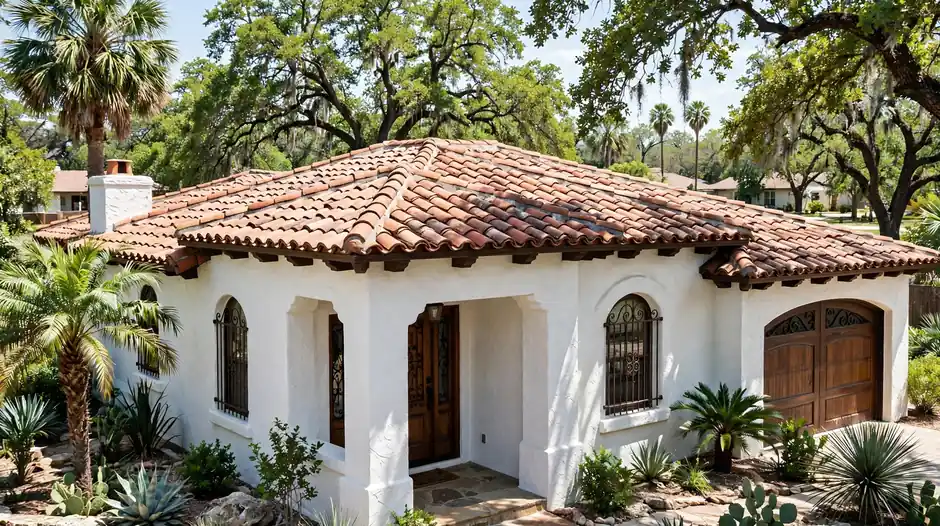
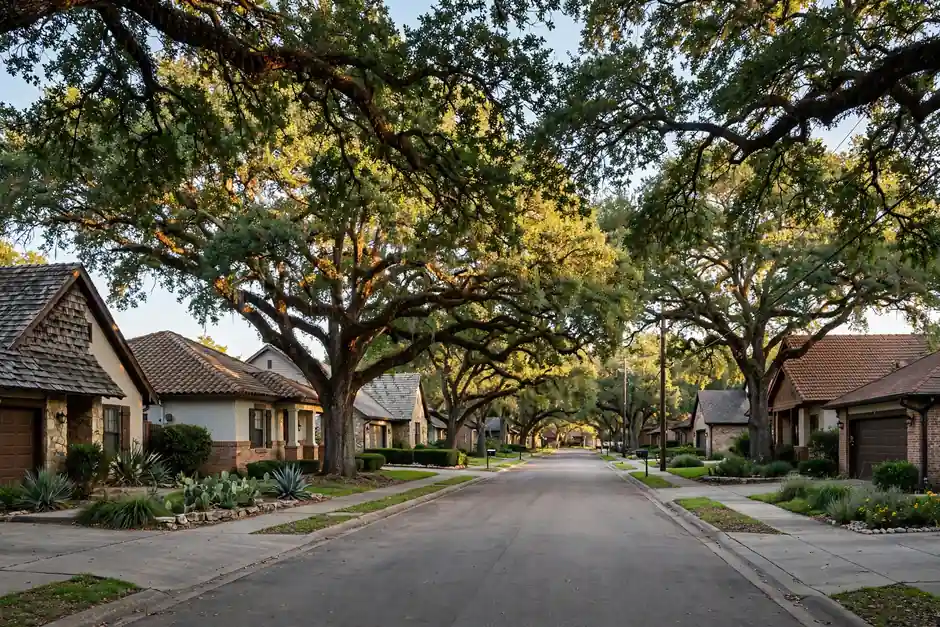
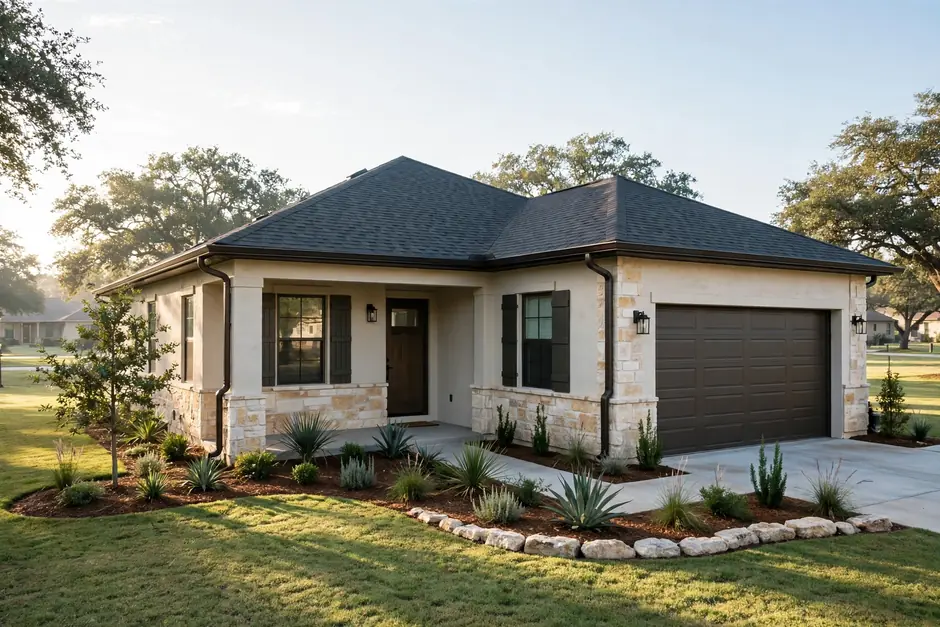
Dignowity Hill sits on the Near East Side, roughly bounded by I-37 to the west, I-35 to the north, and I-10 to the south, in the 78202 area. It is historically the city’s African American community’s neighbourhood, near St. Philip’s College, the Frost Bank Center, the Alamodome, and St. Paul Square around Sunset Station. The houses are Victorian-era, named for Dr. Anthony Dignowity, and the district is local historic district number 5 — one of the 32 locally designated districts in the city. Like the rest of the historic core, its roofs are steep and complex, with patterned shingles and the slate, tile, and wood-shingle fabric that survives in places. The Historic Design Guidelines apply here in full: preserve the original shape, line, pitch, and overhang of a historic roof, preserve the distinctive features, and replace materials in kind wherever possible. Most of these houses were built before slab-on-grade became standard around 1960, so they sit on pier and beam — a fact that matters when a leak shows up inside, because the water’s path through an old house is rarely a straight line.
Explore Dignowity Hill services →
The Certificate of Appropriateness is the operative requirement. All exterior modifications and repairs to a property with a historic zoning overlay need a CoA from the Office of Historic Preservation, including areas not readily visible from the street, and the CoA is required in addition to the City re-roof permit. A hearing is the exception, not the rule: OHP staff clear most requests themselves, and the Historic and Design Review Commission only hears work that falls outside the Historic Design Guidelines, in public. The Guidelines also set a practical threshold: consider roof replacement when more than 25 to 30 percent of the roof area is damaged, or 25 to 30 percent of the tiles or shingles are missing or damaged. That figure is a guideline for historic-district properties only — not a citywide code rule. Hail is the East Side’s recurring storm risk, as it is everywhere in the city: the 3 May 2021 storm dropped a 5.5-inch stone near Sayers on the east side, the largest Bexar County hail report in the 1996-to-2026 record, with 4.5-inch hail near I-410 and Paula Drive in eastern San Antonio the same day.
Juarez contracting & innovation LLC