Lift-and-relay
The tile comes up, new underlayment and flashing go down, and the sound original tile goes back on. You keep the roof's look for a fraction of a full tile replacement.
Clay and concrete tile dominate the upscale San Antonio neighbourhoods: Alamo Heights, Terrell Hills, The Dominion, Stone Oak and Shavano Park, and the older Mediterranean and Spanish-style homes citywide. The tile itself lasts 50-plus years. The underlayment underneath it fails at 20 to 30 years, and that is the service-life limit. A tile roof that leaks is almost always an underlayment roof that has failed, not a tile roof that has worn out.
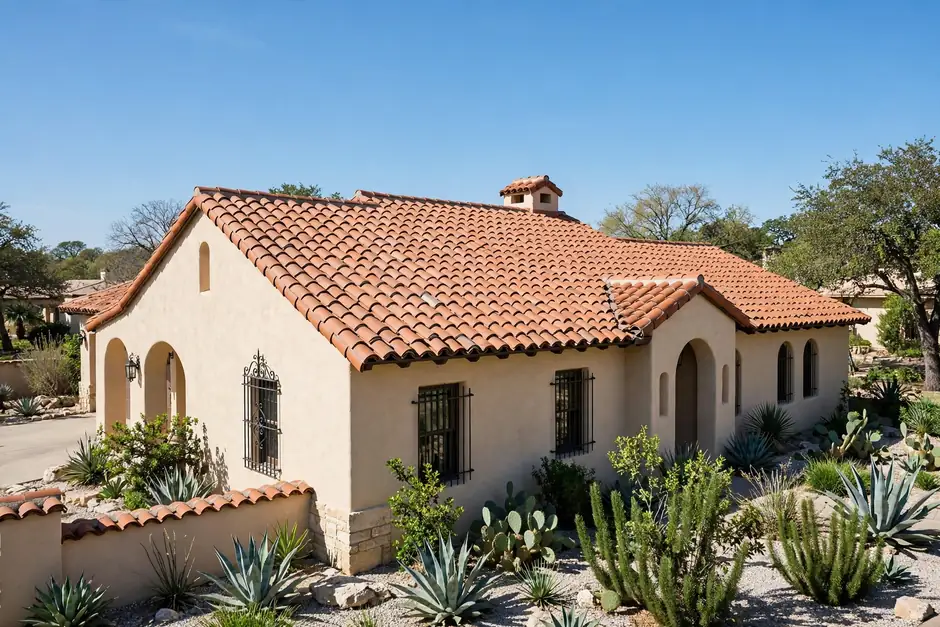
A tile roof is two roofs. The tile is the weathering surface: it sheds water, resists UV and lasts 50-plus years. The underlayment is the waterproofing: it carries the water the tile sheds, and it fails at 20 to 30 years. When a tile roof leaks, the fix is usually a lift-and-relay: lift the tile, replace the underlayment and flashing, and relay the sound original tile. Two other roofers quoting a full tile replacement for a failed underlayment are quoting the wrong job.
Weight is the other fact that decides everything. Concrete tile weighs 900 to 1,100 pounds per square and clay 800 to 1,000, six to eight times the roughly 200 to 240 pounds of asphalt. The structure must be engineered for it. Switching from shingles to tile needs an engineer's check and an engineer's report for the City permit, and the re-roof application asks about the change to tile directly. Large hail or foot traffic can crack individual tiles, while the underlayment below them usually comes through intact.
Tile work is underlayment work with a tile surface on top. Every tile job runs through the checks and the work below.
The tile comes up, new underlayment and flashing go down, and the sound original tile goes back on. You keep the roof's look for a fraction of a full tile replacement.
On a tile roof the underlayment is the waterproofing — and the service-life limit. We replace it with a system suited to tile and to San Antonio heat.
Individual cracked tiles are replaced and matched. Tile cracks under large hail or foot traffic while the underlayment survives, and we say so when that is what we find.
During a lift-and-relay we rebuild the step flashing, valley metal and penetration flashing — old flashing is where the next leak starts.
A switch to tile needs an engineer's check of the structure. We talk through the engineering and the permit before any tile is ordered.
Sound original tile is kept, and salvaged tile is re-used on the slopes the street sees, following the historic-district practice for the city's older homes.
We walk the roof to count cracked tiles, check the underlayment's age and condition from the attic side, and find where the leak gets in.
The scope sets out what is lifted, what underlayment and flashing are replaced, and which tiles are salvaged, so you can see the job before it starts.
We lift the tile carefully, sort it into sound, cracked and salvage, and store it so foot traffic during the work does not break it.
Once the deck is checked and repaired where needed, the bare deck gets new underlayment and flashing.
Sound original tile is relayed, cracked pieces are matched from salvage, and we walk the finished roof with you, showing the flashing details.
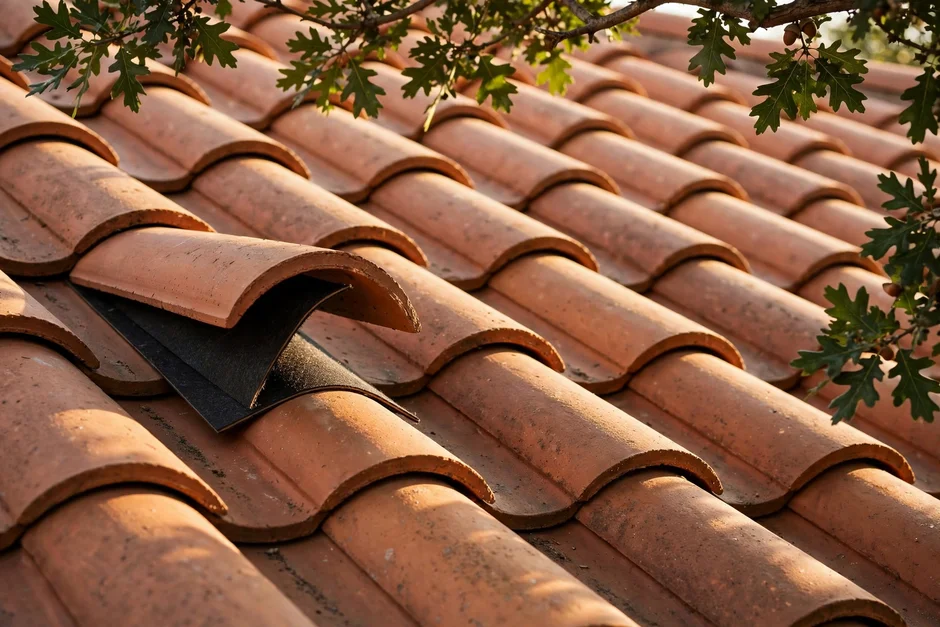
We walk the roof, count cracked tiles, check the underlayment's age and condition from the attic side, and look for the leak's entry point.
Gets tiles up without cracking the sound ones beside them, so a lift-and-relay saves the original tile rather than breaking it.
Checks the underlayment from the attic side, so the call to lift and relay rests on what is actually there instead of a guess.
Detail work at flashing and penetrations, where tile work meets the waterproofing layer underneath.
Chalks the reference lines the tile courses follow. Straight courses are not about looks; they are the visible proof the relayed tile was laid to spec.
Tile is brittle underfoot, so a tile roof is more dangerous to walk than a shingle roof — and fall protection goes on every pitch.
A sweep of the lawn and driveway after the job, because tile fragments and nails from a lift-and-relay are a hazard on their own.
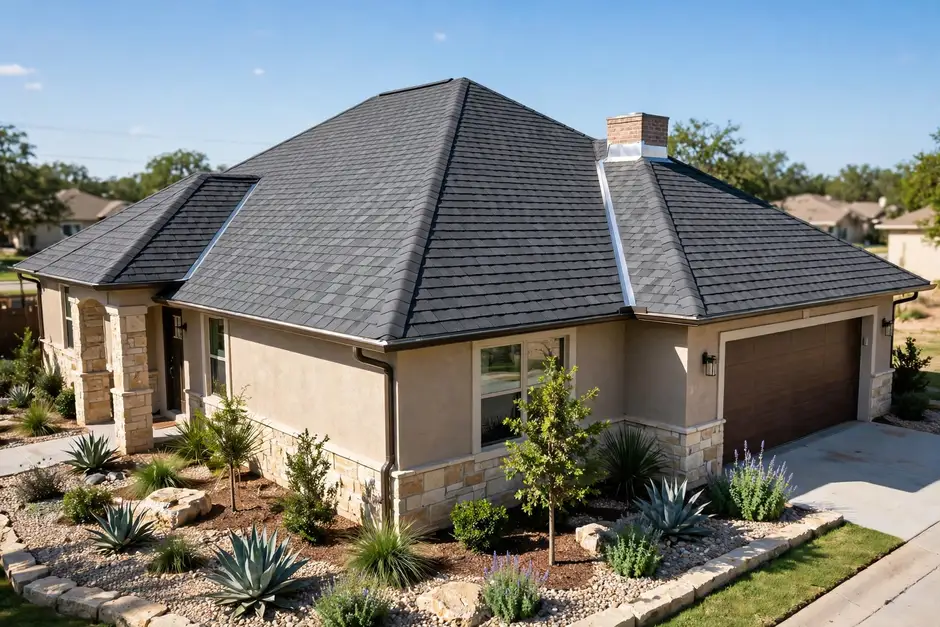
A tile roof around 25 years old and leaking at the valleys, with the tile itself sound, usually needs the underlayment renewed underneath — a lift-and-relay, not new tile.
What we do: lift the tile, renew the underlayment and valley flashing, and relay the sound original tile — the valleys stop leaking and the roof keeps its look, for a fraction of a full tile replacement.
Book this service →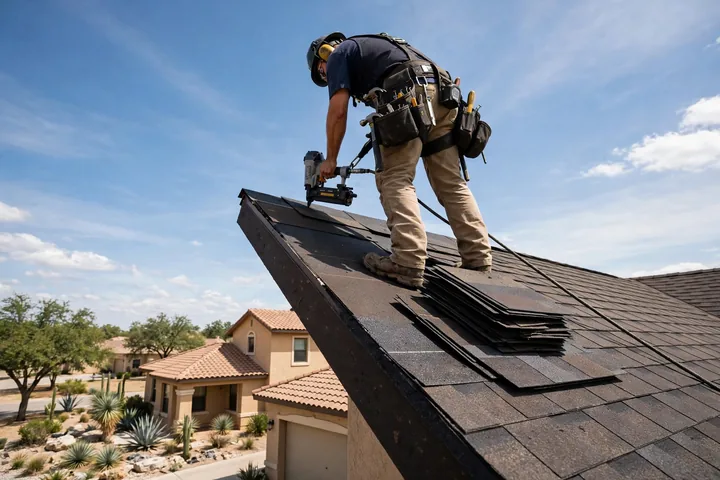
A 1920s home still with its original clay tile, but with failed underlayment, needs the historic look kept — a full tile replacement would destroy it.
What we do: lift and relay the original tile, replacing cracked pieces from salvage stock, under the historic district's Certificate of Appropriateness process.
Book this service →
When large hail cracks tile but the underlayment underneath is still sound, that is a repair job, not a re-roof.
What we do: count and locate the cracked tiles, match the replacements, and check the underlayment before any tile is lifted — so the job stays a tile repair, not a re-roof.
Book this service →Tile roofs fail in ways that have little to do with the tile: a roof that leaks while the tile is still sound, a shingle-to-tile switch with no engineering behind it, cracked tiles after hail, or a full tile quote for what is really an underlayment job. These are the tile problems we see most, and what happens when the wrong one gets fixed.
Ask a pro →When the tile is sound and the roof still leaks, the underlayment is the problem. We lift and relay rather than quoting a full tile replacement for an underlayment failure.
Tile weighs six to eight times asphalt. We check the structure and the permit before any tile is ordered.
Large hail can crack tile while the underlayment underneath stays intact. We swap the cracked tiles and inspect the underlayment, instead of replacing a roof that does not need replacing.
We show you the underlayment evidence from the attic side, so you can see why lift-and-relay is the right job.
“Found their ad on marketplace, super quick feed back. Gentlemen stopped by same day to inspect roof. This company is extremely professional and quick. They had our roof done in 2 days. Great price point and easy to work with. Thank you Juarez Contracting.”
Alethia VelazquezGoogle review
“Chris was professional, on time for the estimate, very informative about what needed to be done,and willing to work with me. Thank you for a job well done.”
Belinda SalinasGoogle review
“Very fast estimate and fixed within 24 hours of asking them for help. Very fast and very reliable. My roof looks great!”
Jamie KGoogle review
Tile itself lasts 50-plus years, but the underlayment underneath fails at 20 to 30 years — that is the service-life limit. A leaking tile roof is almost always a failed underlayment, not failed tile.
Lift-and-relay means the tile comes up, new underlayment and flashing go in, and the sound original tile goes back down — the roof keeps its look for a fraction of a full tile replacement.
Only if the structure is engineered for it. Concrete tile weighs 900 to 1,100 pounds per square, six to eight times asphalt. The City's re-roof application asks about a change to tile, and an engineer's report is needed. We talk through the engineering and the permit before any tile is ordered.
Alamo Heights, Terrell Hills, The Dominion, Stone Oak and Shavano Park, and older Mediterranean and Spanish-style homes citywide. Many homes built after 1980 in Stone Oak, Shavano Park and Alamo Heights were designed for tile.
Call (254) 329-0299 during business hours for a tile inspection that checks the underlayment, not just the tile.
Call (254) 329-0299 →Call us at (254) 329-0299 or send an email. We answer the phone during business hours and return after-hours messages first thing the next business morning. Tile inspections are by appointment.