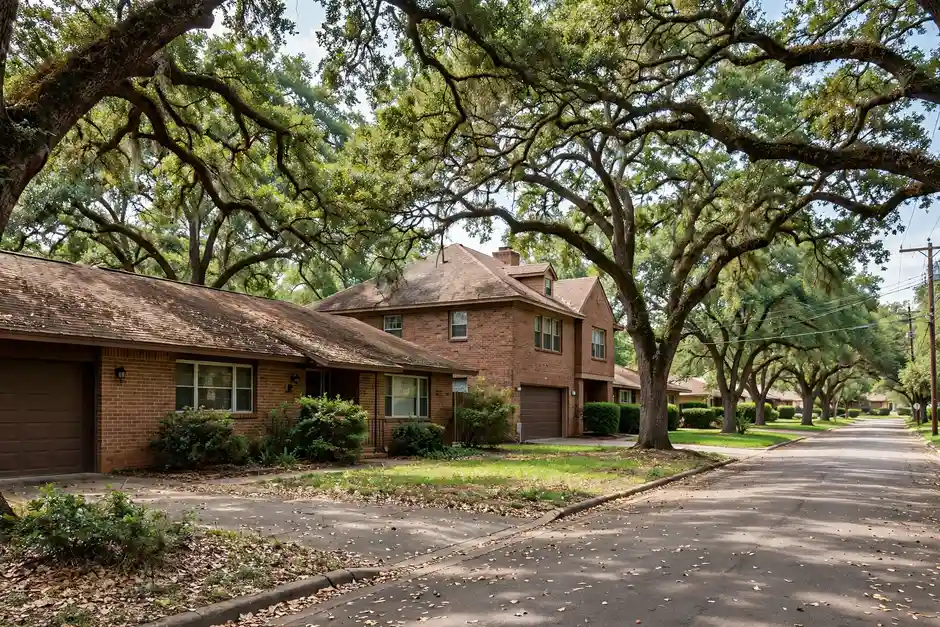
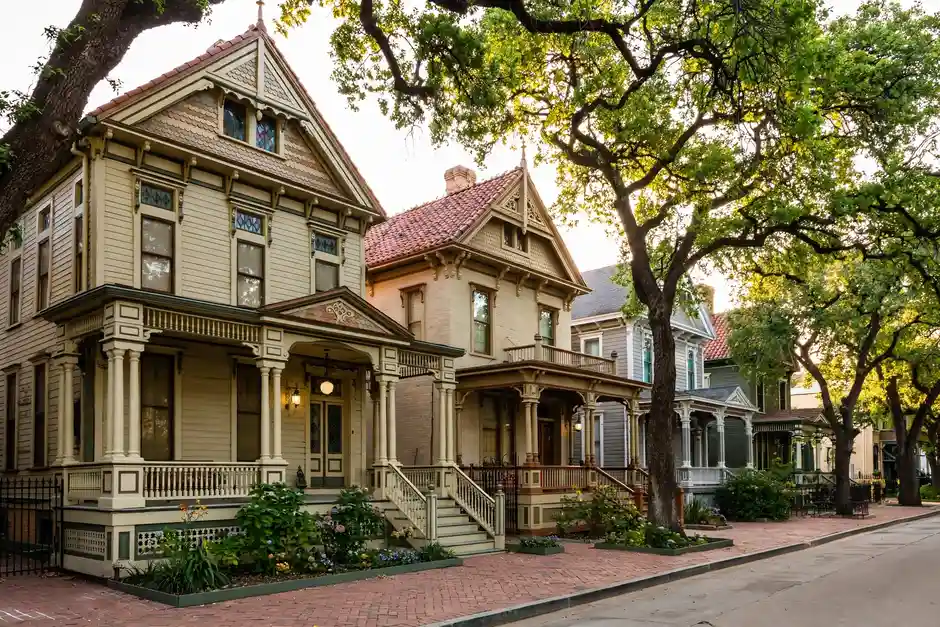
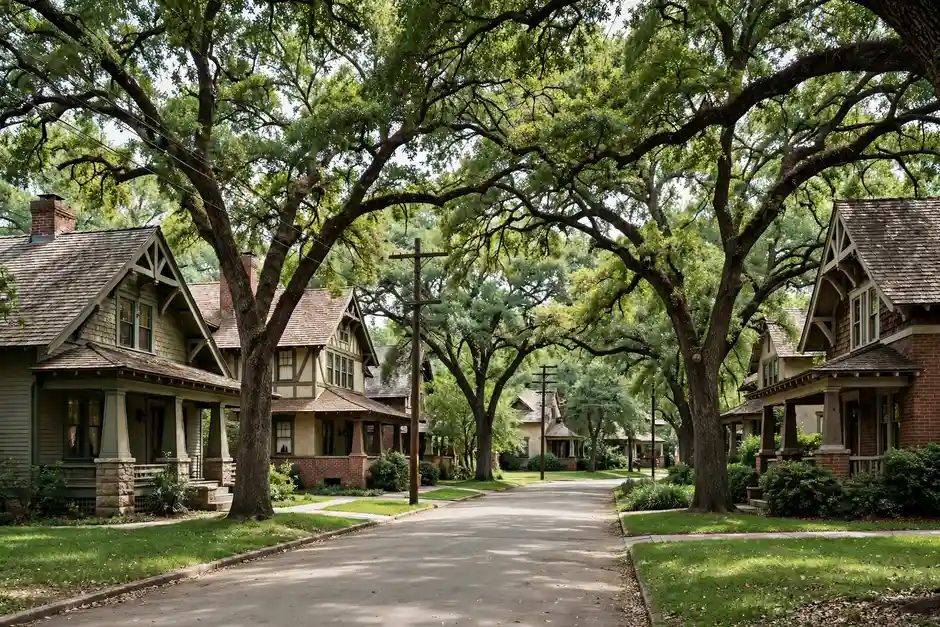
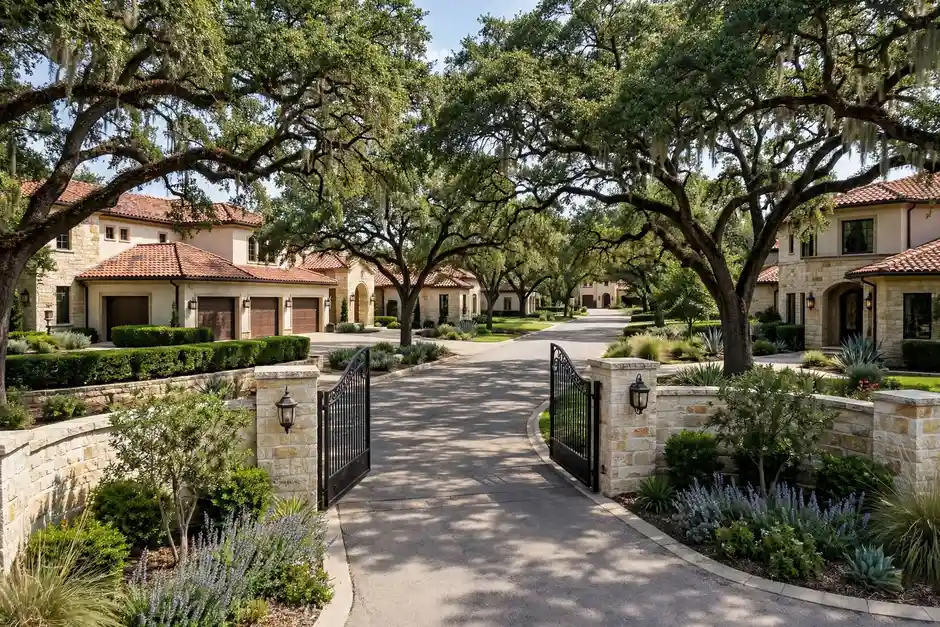
The Dominion sits in the northwest of San Antonio, in the 78257 area, as one of the city’s most prestigious gated communities — large homes, golf course, stone and stucco elevations, and HOA governance that expects material and colour approval before a roof is touched. Tile dominates here for the same reasons it dominates in Alamo Heights, Terrell Hills, and Stone Oak: Spanish and Mediterranean-style homes, houses designed for tile from the start, and HOAs that commonly require a tile look. The trade consensus is consistent on what that means in practice. Tile weighs roughly 900 to 1,100 pounds per square for concrete and 800 to 1,000 for clay, against 200 to 240 for asphalt — six to eight times as much — so the structure must be engineered for it, and a switch from shingle to tile needs an engineer’s check. Individual tiles crack under large hail or under foot traffic, while the underlayment beneath usually survives. And the underlayment is the service-life limit: 20 to 30 years, against 50-plus for the tile itself.
Explore The Dominion services →
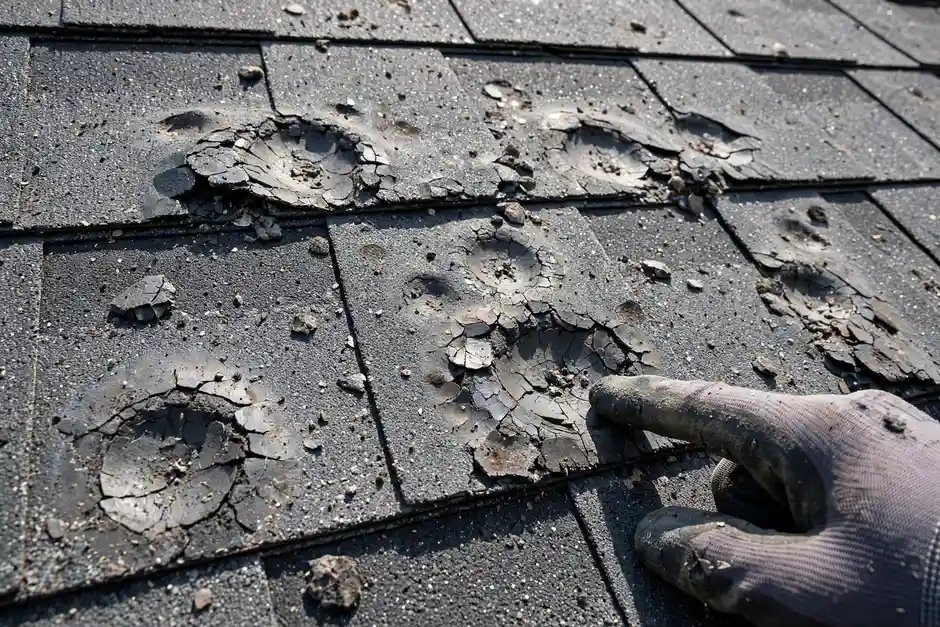
Hail is the Dominion’s recurring test, and it tests tile differently from shingle. Stones around 1.5 inches and up crack individual tiles, and the 12 April 2016 storm — 4.5-inch stones, around $1.36 billion in damage, the costliest hailstorm in San Antonio history — put the whole northwest side on notice. The 25 April 2016 storm, thirteen days later, dropped baseball-size hail in the Shavano Park area near USAA and I-10 and Huebner, just south of here. A tile roof after a storm like that needs a tile-by-tile count: which tiles are cracked, which are sound, and whether the underlayment beneath them is still doing its job. That count, done slope by slope with photos, is the inspection — and it is also the document an insurer works from, because you file the claim yourself and a roofer may not act as your public adjuster under Texas law.
Juarez contracting & innovation LLC