Slope-by-slope hail map
Every slope is checked for bruising, granule loss and cracked tile, marked and photographed, so the damage map is complete.
Hail is the defining roof risk in San Antonio, and it is a spring risk. About 85 percent of Bexar County hail of one inch or more falls in March, April and May. The anchors are dated: 12 April 2016, 4.5-inch stones and about $1.36 billion in damage; 25 April 2016, 2.75-inch stones in Shavano Park; 3 May 2021, a 5.5-inch stone near Sayers. Hail repair here starts by measuring your roof against that record.
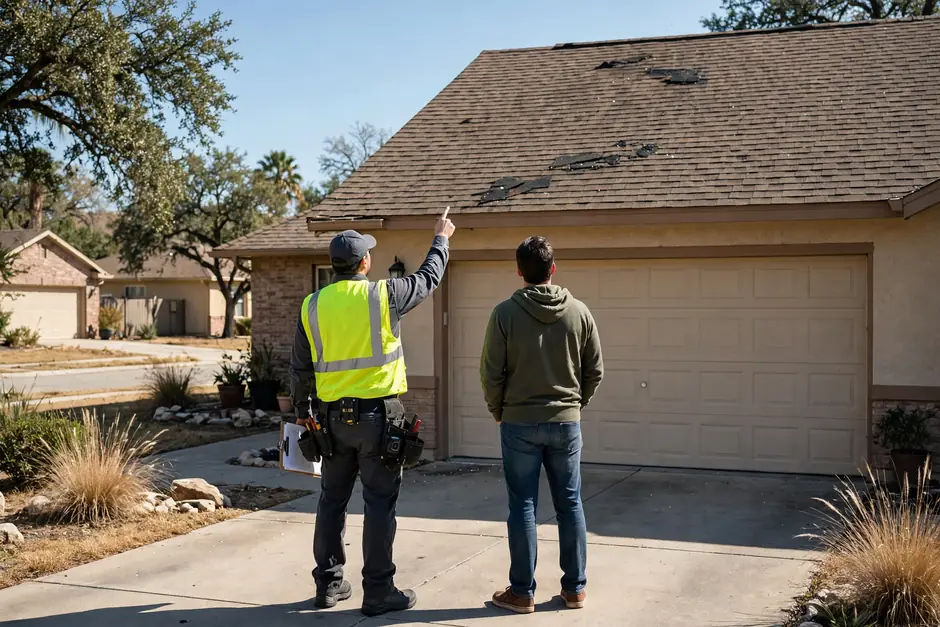
Hail damage depends on stone size and roof material. At one inch, the National Weather Service severe threshold, asphalt shingles can bruise and lose granules. At golf-ball size, 1.75 inches, roofs, siding and vehicles are commonly damaged. Tile can crack under large stones or foot traffic, while the underlayment underneath often survives. Metal typically dents rather than breaking through. The damage is not always visible from the ground, which is why the inspection walks every slope.
The record matters because your insurer will ask when the damage happened. Bexar County logged 363 hail reports of one inch or more from 1996 to mid-2026, with 310 of them in March through May and 158 in April alone. The largest Bexar County report in that extract is the 5.5-inch stone of 3 May 2021 near Sayers. The 6.42-inch stone of 28 April 2021 was at Hondo in Medina County, the Texas record, not a San Antonio stone, and we do not attribute it to Bexar County.
A hail repair is only as good as its documentation. Every hail call gets the checks and the written record below.
Every slope is checked for bruising, granule loss and cracked tile, marked and photographed, so the damage map is complete.
Granules are a shingle's sunscreen. Hail strips them, and the loss is recorded as the roof's age clock, not just cosmetic damage.
Cracked tiles are counted and located. Underlayment underneath is checked, because the underlayment, not the tile, is usually what fails first.
Standing-seam and stone-coated steel are checked for denting and seam damage. Metal typically dents rather than breaking through, and we say so when that is what we find.
We record what the hail did and what is age and wear. A straight answer protects your claim and keeps the repair honest.
You get a written scope with photos that you can give your insurer. We do not file or negotiate the claim; that is your claim to make.
Call (254) 329-0299 during business hours and tell us the storm date and what you saw. The date matters, because the hail record is dated.
We walk every slope, mark and photograph bruising, granule loss and cracked tile, and check the attic side with a moisture meter.
You get a written scope with a hail map by slope, separating hail damage from age and wear, ready for your records.
If the roof is open we tarp and stabilise it during business hours, so the next rain does not widen the damage.
The repair or replacement is scheduled once the weather clears, with permit paperwork prepared where a re-roof is needed.
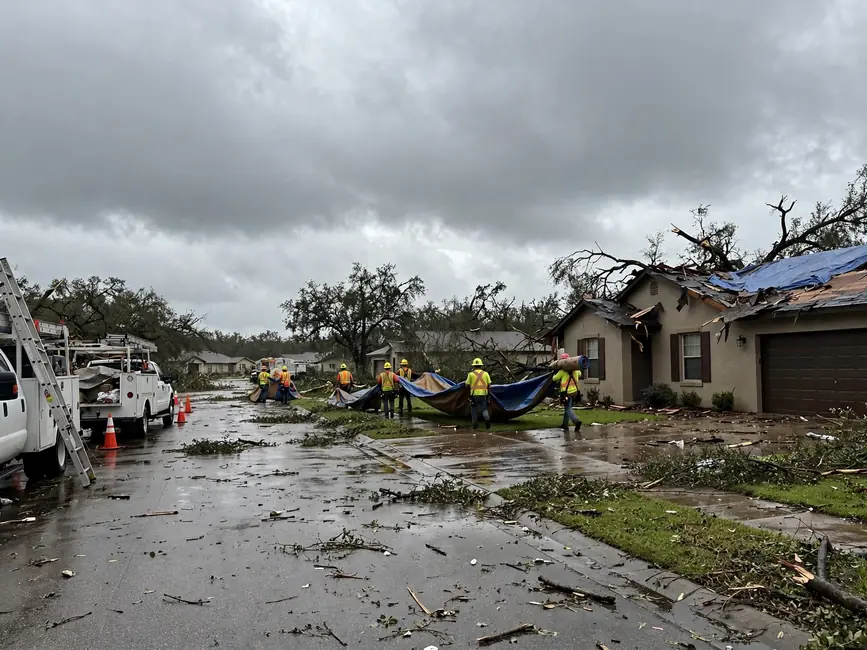
Call (254) 329-0299 during business hours and tell us the storm date and what you saw. The date matters, because the hail record is dated.
Hail bruising is photographed and located by slope before anything is moved, so the record shows what the storm left.
Bruises and soft spots are marked on the roof as we find them, so the damage map is complete and countable.
Traces how far the water travelled through the deck and attic, so the scope covers the real damage rather than only the bruising you can see.
Lifts damaged shingles and tiles without tearing the sound ones around them, so a repair stays a repair.
Fall protection on every pitch. A hail-damaged roof can be brittle and more dangerous underfoot than a sound one.
A sweep of the lawn and driveway after the visit, because hail debris and nails are a hazard on their own.
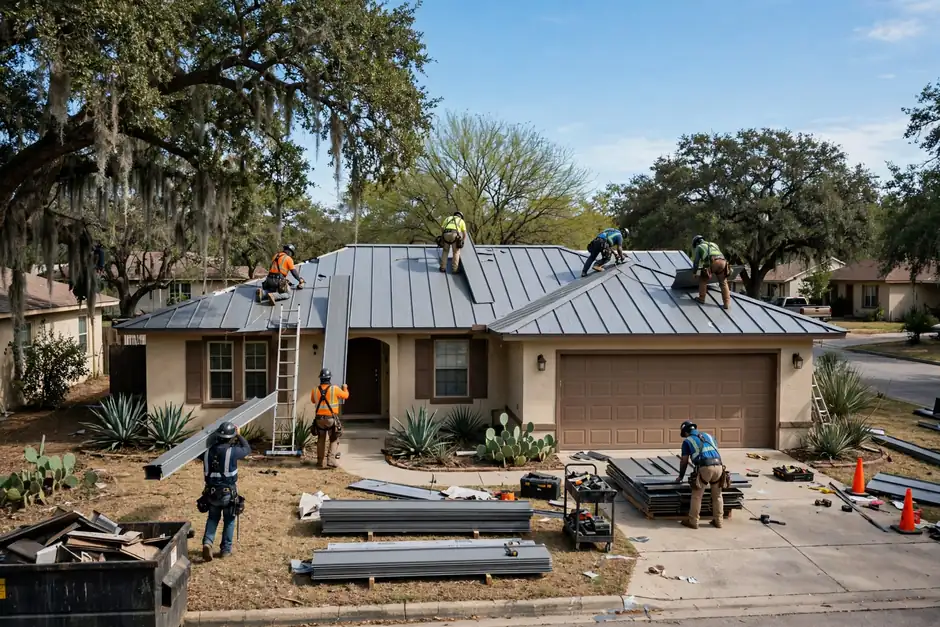
A severe hailstorm can leave bruising across the north and west slopes, with granule loss that is easy to miss from the ground.
What we do: a slope-by-slope hail map with photos, granule loss recorded, and a written scope separating hail damage from age, ready for the homeowner's insurer.
Book this service →Baseball-size hail can crack tile and bruise shingles in a single storm, even when the roof is not leaking yet.
What we do: tile cracking counted and located, underlayment checked underneath, and a scope that covers the tile repair and the underlayment where it failed.
Book this service →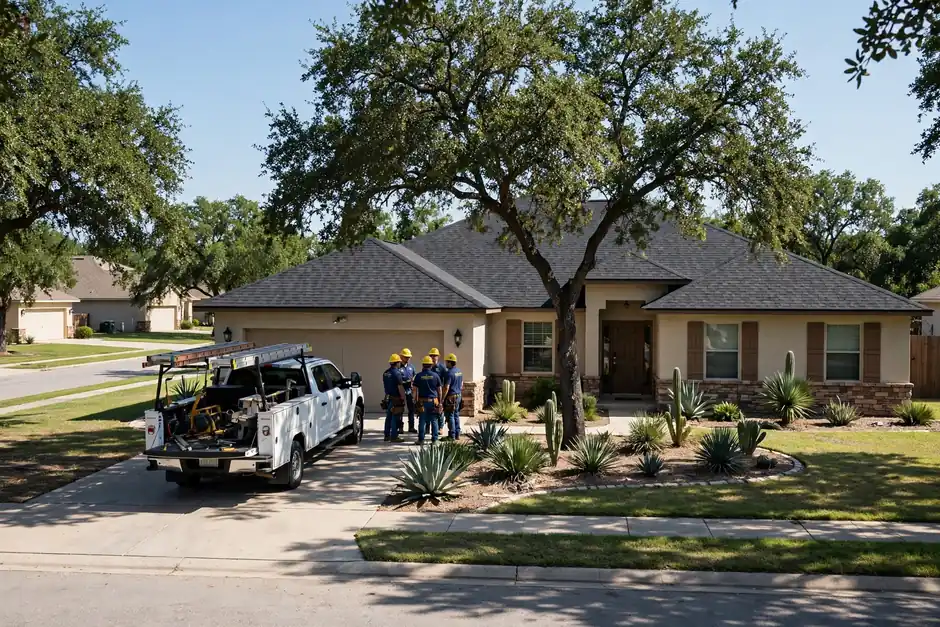
A storm dropping very large hail can bruise a roof without leaking on day one, which is why the damage is mapped slope by slope.
What we do: hail mapping across every slope, cracked tile and bruised shingles photographed, and a scope that separates the storm's damage from the roof's age.
Book this service →Hail damage is easy to miss and easy to misread: bruising nobody photographed, granule loss dismissed as cosmetic, cracked tile over a sound underlayment, or the wrong storm blamed for old wear. These are the hail problems we see most after a San Antonio storm, and what they turn into when they are not caught.
Ask a pro →We map bruising slope by slope while it is fresh. Undocumented hail becomes a denied claim and a leak two years later.
Granules are a shingle's sunscreen. Hail strips them and the bare asphalt ages fast. We record the loss as roof life, not cosmetics.
Big hail can crack tile while the underlayment underneath survives. We swap the cracked tiles and check the underlayment, instead of quoting a full tile replacement.
We date the damage against the Bexar County record. The 6.42-inch stone of April 2021 was at Hondo, not San Antonio, and we do not attribute it to your roof.
“Found their ad on marketplace, super quick feed back. Gentlemen stopped by same day to inspect roof. This company is extremely professional and quick. They had our roof done in 2 days. Great price point and easy to work with. Thank you Juarez Contracting.”
Alethia VelazquezGoogle review
“Chris was professional, on time for the estimate, very informative about what needed to be done,and willing to work with me. Thank you for a job well done.”
Belinda SalinasGoogle review
“Very fast estimate and fixed within 24 hours of asking them for help. Very fast and very reliable. My roof looks great!”
Jamie KGoogle review
March through May. About 85 percent of Bexar County hail reports of one inch or more in the 1996 to mid-2026 record fall in those three months, and April alone accounts for 158 of 363 reports.
One inch is the National Weather Service severe threshold and can bruise asphalt shingles. At 1.75 inches, golf-ball size, roofs, siding and vehicles are commonly damaged. Tile can crack under large stones, and metal typically dents rather than breaking through.
The largest Bexar County report in the modern record is the 5.5-inch stone of 3 May 2021 near Sayers. The 12 April 2016 storm brought 4.5-inch stones and about $1.36 billion in damage. The 6.42-inch Texas record stone of 28 April 2021 was at Hondo in Medina County, not San Antonio.
That depends on your policy. We document the damage with photos and a written scope that you can give your insurer. We do not file the claim or negotiate it, and Texas law bars a contractor from acting as your adjuster. Your deductible is yours to pay.
Call (254) 329-0299 during business hours for a slope-by-slope hail inspection with photos and a written scope.
Call (254) 329-0299 →Call us at (254) 329-0299 or send an email. We answer the phone during business hours and return after-hours messages first thing the next business morning. Hail inspections are by appointment.